K-Pour Chronicles – Episode 4: Déjà Bu in Gyeongju
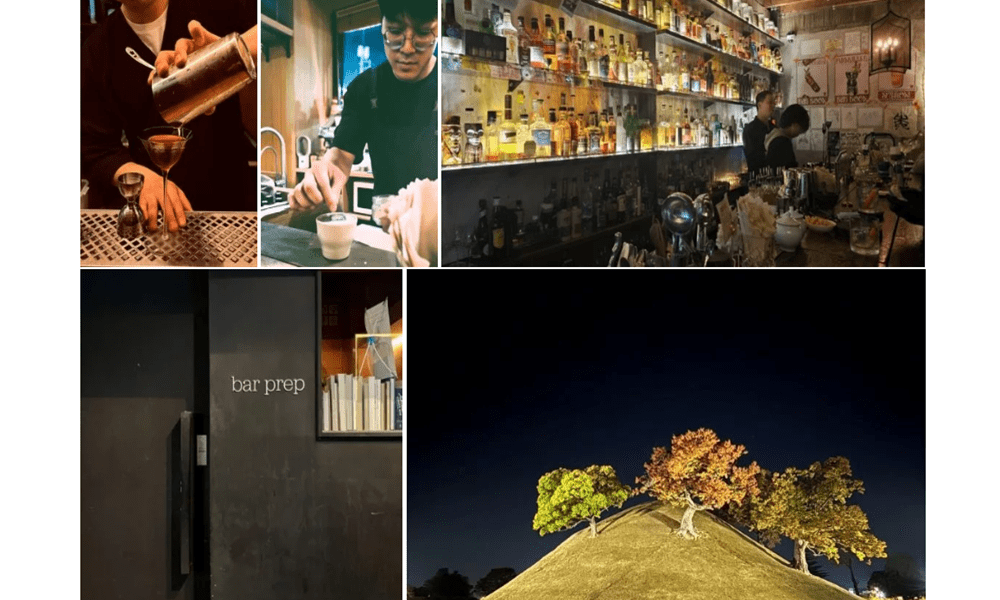
Some places you visit once. Others call you back. After the bright lights of Seoul and the salty air of Jeju, we returned to Gyeongju — the city that stayed with me most deeply from my first trip through South Korea. There’s a quiet magic here: the slow rhythm of daily life, the glow of the sun over temple roofs, the stillness between tombs and trees. It feels timeless. And then there are the bars. Especially the bars.
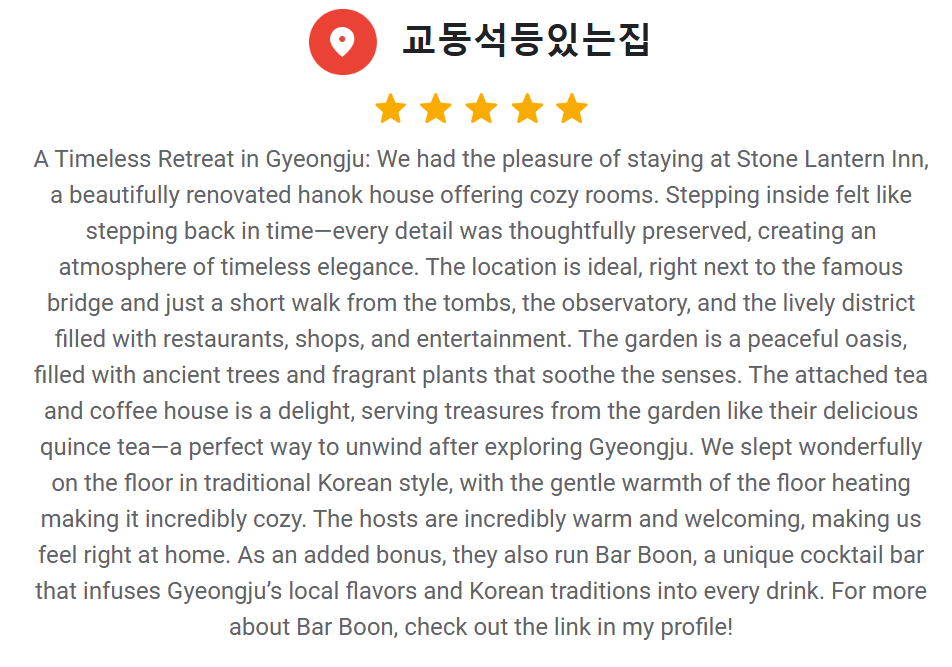
Gyeongju’s cocktail scene isn’t loud. It doesn’t try to impress. But it is honest, personal, and quietly brilliant. Two of my favourite bars in the country live here — Bar Boon and Bar Prep — and this time, I returned not just to drink, but to stay a little longer. And this time, we stayed five days. Even better: we stayed in a beautiful, traditional Korean hanok — a guesthouse run by the mother of Bar Boon’s bartender and founder, Jay. The same Jay whose cocktails already made a strong impression on me last time. Now, I was sleeping in the hanok and drinking ingredients that grew right outside the room. The experience moved beyond drinking — into living the rhythm of the bar, the city, and its stories.
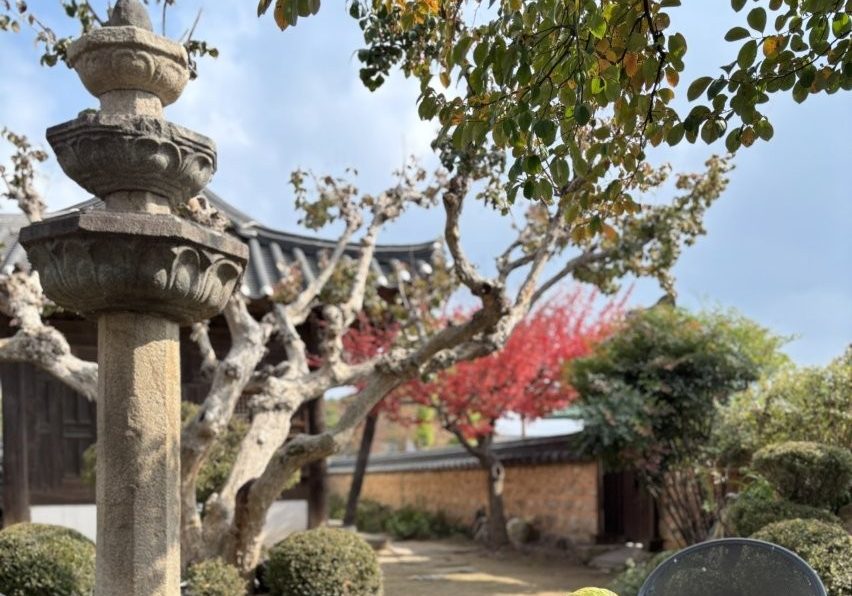
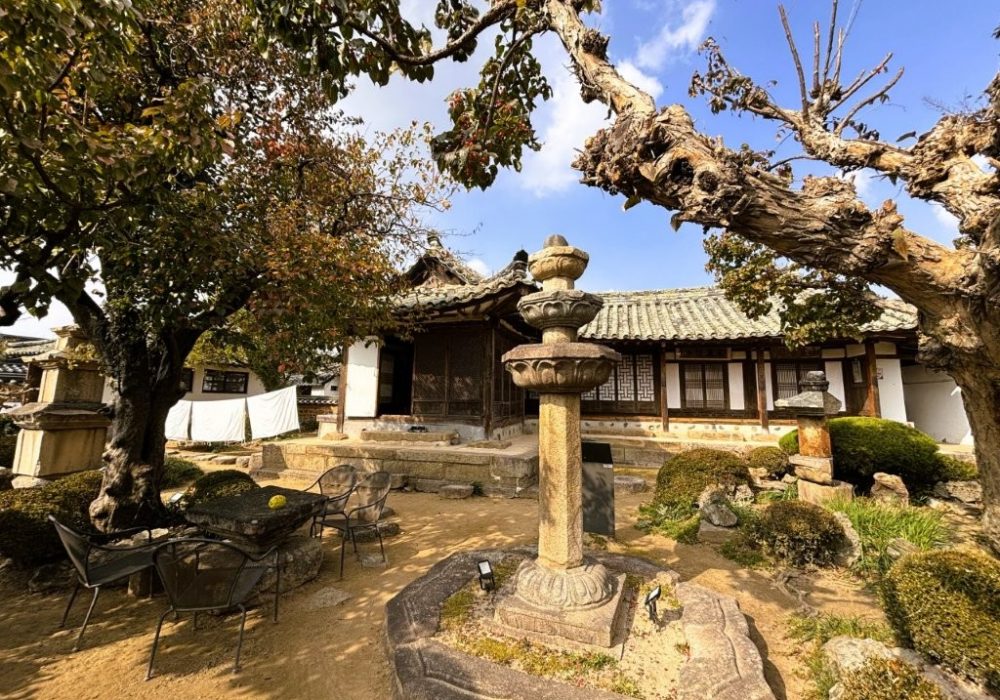
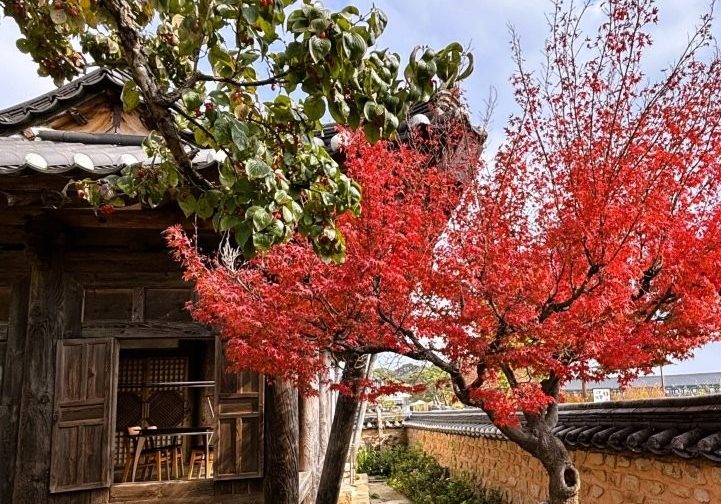
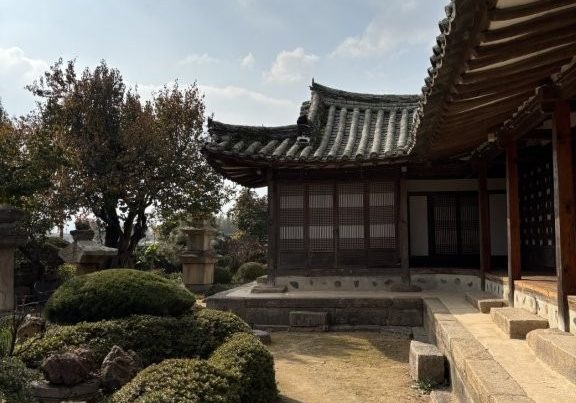
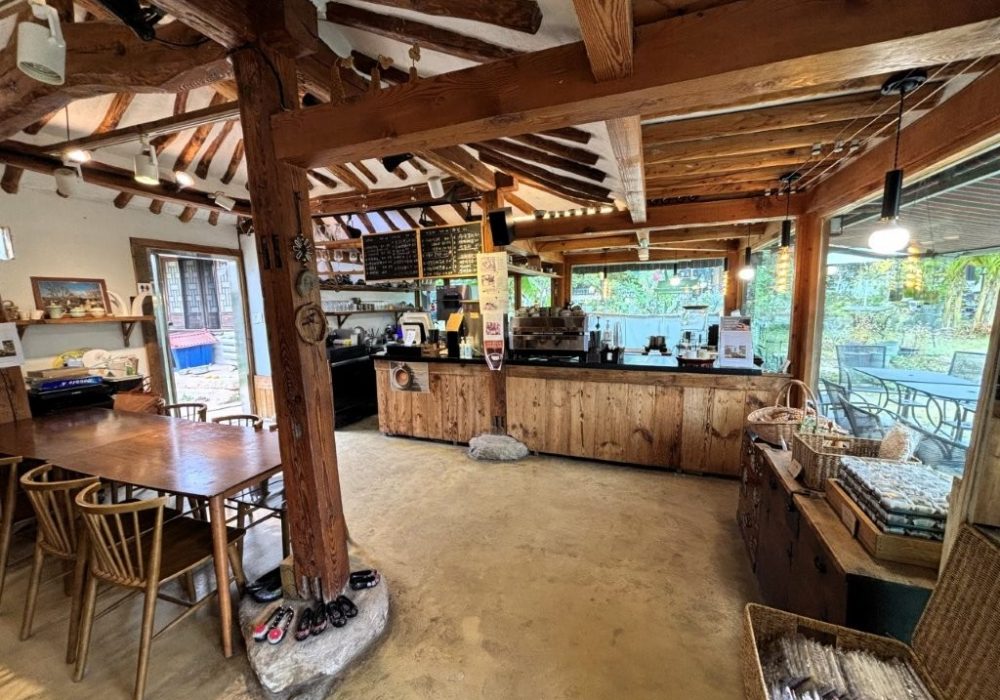

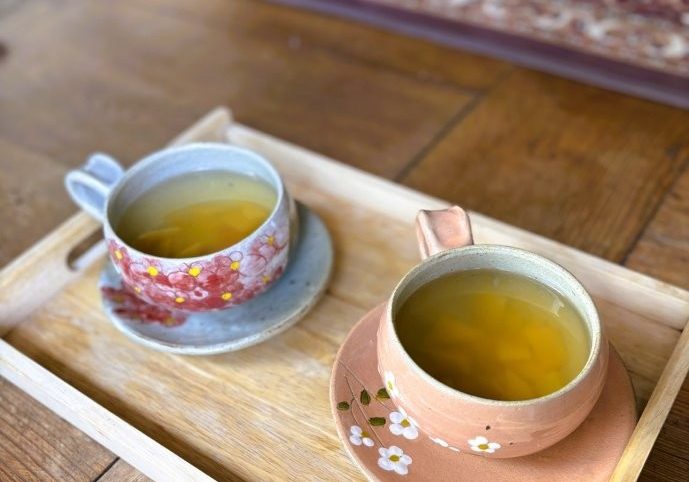
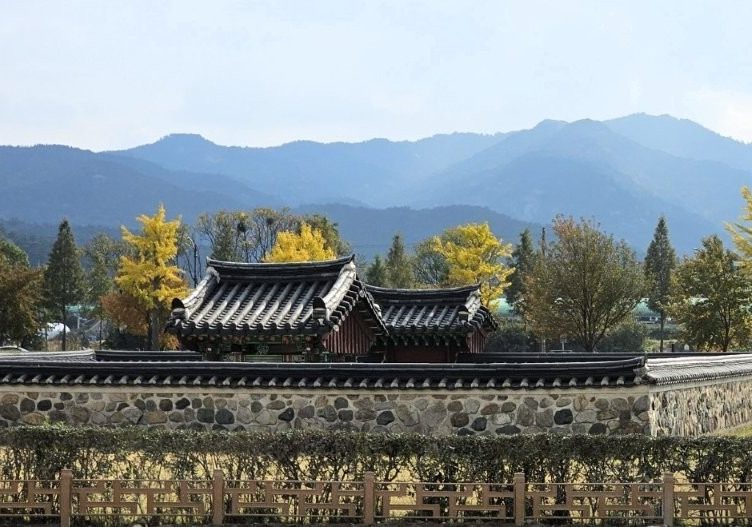
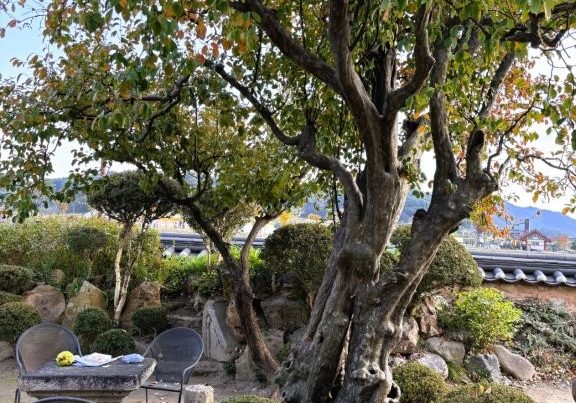
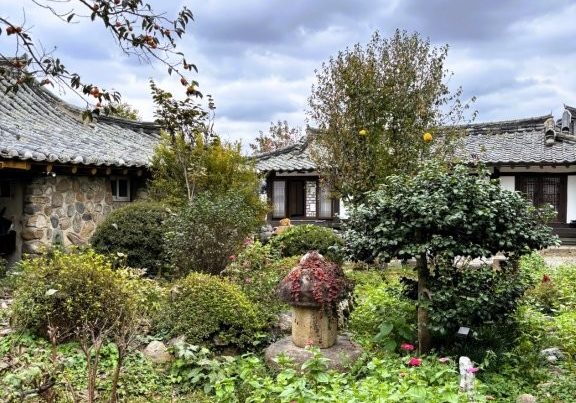
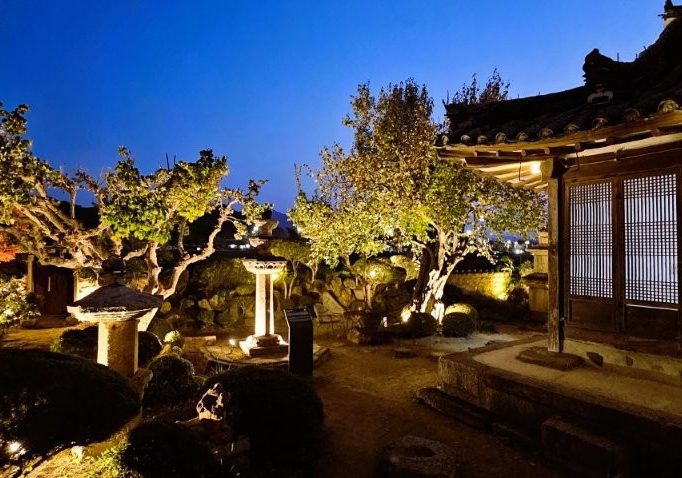
Both Bar Boon and Bar Prep are now celebrating their 4th birthdays. They opened around the same time and have grown quietly, side by side, like old trees in different corners of the same courtyard. This visit was less about discovery and more about connection — about seeing the people behind the bar again, sharing stories, listening closely, and noticing how the flavour of a drink changes when you feel at home.
Bar Boon – A Korean Soul with a Global Heart
Of course, our first stop after checking in was Bar Boon. Since my last visit, something new had appeared: just across the alley, Bar Boon 2nd had opened — same vibe, less noise, fewer bottles, more intimacy. The original Boon, meanwhile, still buzzes — louder music, longer backbar, vibrant conversations. Both bars share the same soul, but Boon 2nd feels like the introvert sibling.
What hasn’t changed is that Bar Boon, in general, is a cocktail bar that incorporates a lot of Gyeongju — and even more so, Korean taste — into its drinks and drinking culture. Most of the cocktails highlight unique local flavours and seasonal ingredients such as fruits, herbs, roots, spices, and traditional Korean liquors.
Jay, the owner, refined his bartending in San Diego before returning to Korea. His drinks and concept reflect this blend — global technique, local soul. Every cocktail tells a story here, and that story often begins in the garden of his guesthouse or with ingredients grown by his family. Just when we left Gyeongju, the new winter menu had just been launched, and we were lucky to be the very first guests to try it — especially the new warm cocktails on the list.
I couldn’t resist the Salted Cream Soft Persimmon Granita — a frozen dessert-drink hybrid made with soju, soft persimmon, cream, salt, and lemon. The persimmons? Grown on Jay’s family farm in Changwon. The result? Pure comfort, with a sweet–savory twist. On the new menu, it comes with fig & oolong tea and pear & lemon variations. One favourite from both last and this visit was the Spicy Trifoliate Orange — a fiery yet elegant mix of Campari, Korean citrus, ginger honey, Chungyang pepper, and lime, all built on a mezcal base. The trifoliate oranges came from Jay’s home, giving the drink a nostalgic depth you could actually taste.
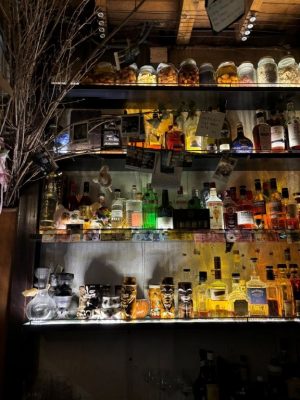
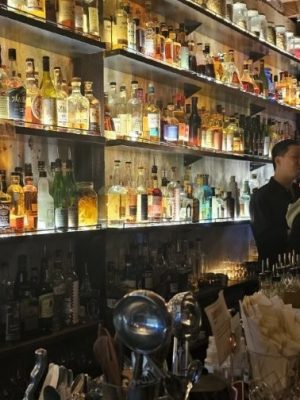
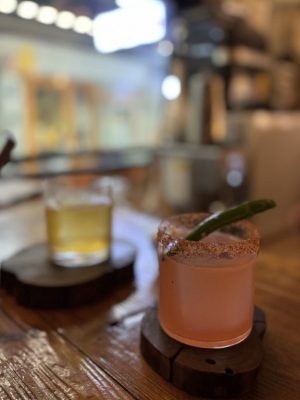
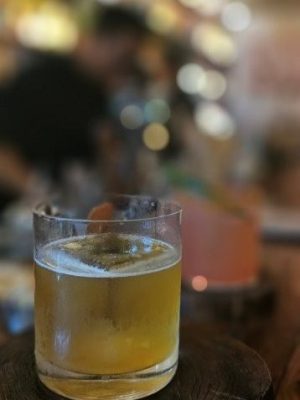
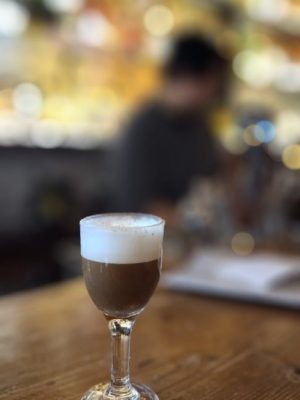
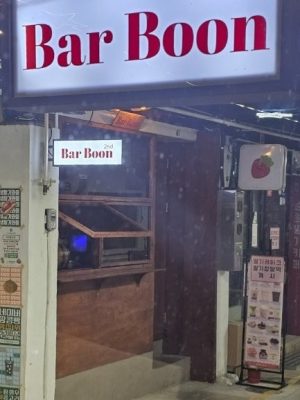
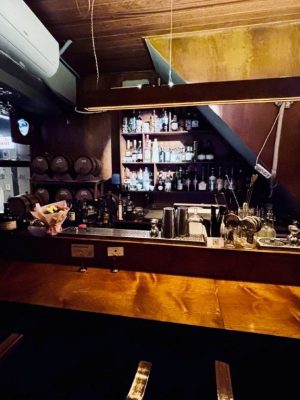
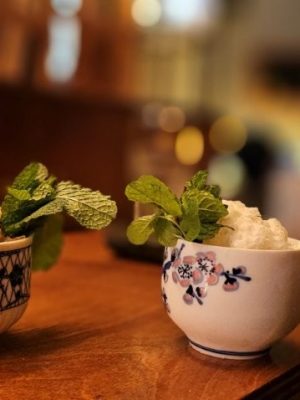
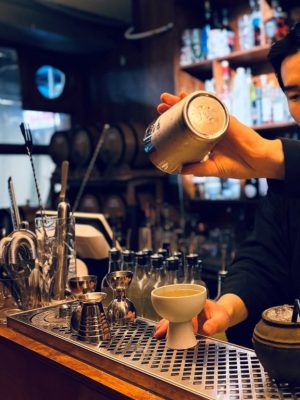
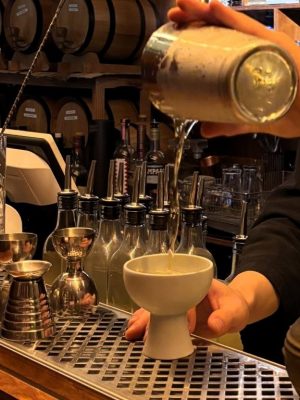
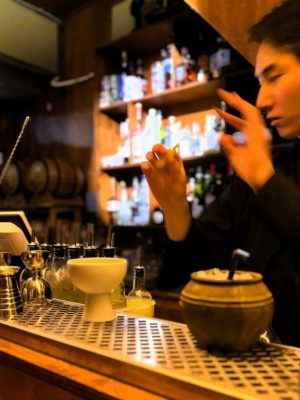
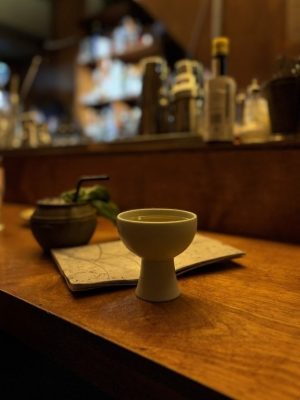
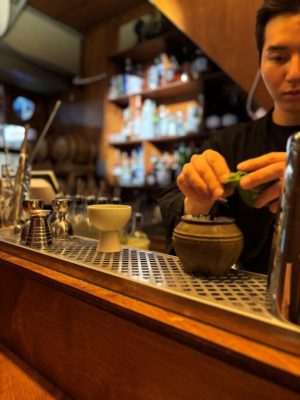
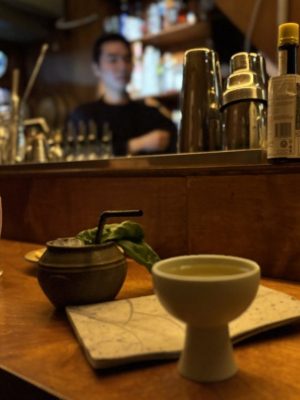
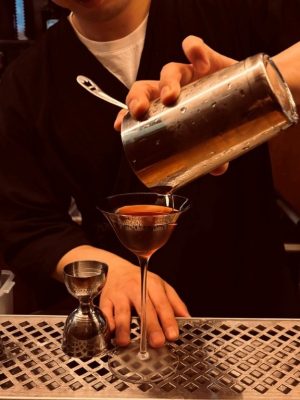
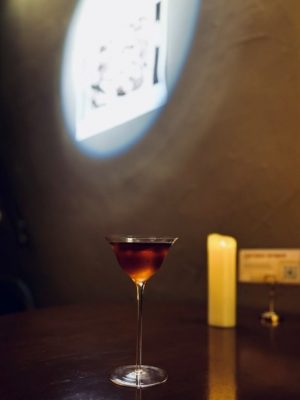
If you’re in the mood for something creamy and comforting, I warmly recommend the Tiramisu Cocktail — it delivers exactly what the name promises. Another highlight was Threesome, which quenched my thirst for cognac. It’s a nicely balanced three-parter made of cognac, Cynar, and Montenegro.
During our stay, we came back every day and slowly drank our way through the menu. Our last night was especially memorable — we were lucky to be the final guests, and had time for a more intimate and reflective moment with Jay, the bar’s owner. His cultural heritage is reflected deeply in the bar’s concept, with a clear focus on highlighting local products.
It was one of those moments that reminds me why I travel. The drinks were excellent, but what truly made it special was the experience—the time, the stories, and the connection. What sets Bar Boon apart isn’t just the drinks—it’s the intimacy. It’s the connection between host and guest. One evening, Jay joined us for a quiet nightcap, pouring something special without a menu in sight. Just a moment. That’s the kind of hospitality that lingers. That’s the real flavour.
Bar Prep – A Quiet Study in Elegance and Intention
If Boon feels like a conversation at a dinner party, Bar Prep is more like a quiet afternoon in a well-designed reading room.
Tucked away in a peaceful neighborhood, Bar Prep is a sanctuary of calm and precision. , with soft lighting and minimal décor, it offers a space designed for comfort— and a bar that lets you breathe. It’s quiet, but never cold. Always welcoming.
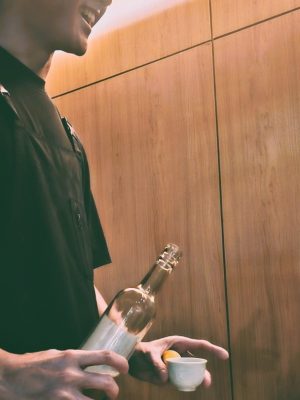
I returned to a drink I’d fallen in love with last time: Temonje 1779. This premium Korean spirit is a kind of cheongju (clear rice wine), made from hand-harvested glutinous rice, fermented with traditional nuruk, and aged for over 100 days at low temperatures. The result? A smooth, lightly nutty, fruity, almost sherry-like profile with subtle herbal notes and a clean finish. Temonje 1779 sits somewhere between elegance and soul. A true taste of Korea’s past — and present.
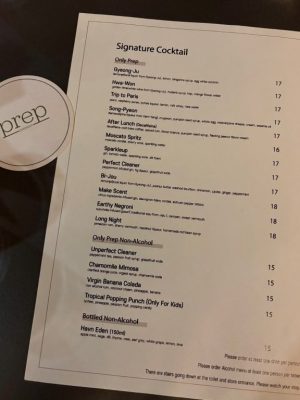
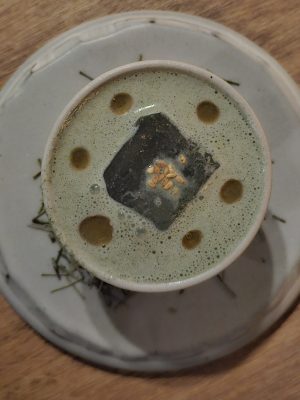
One cocktail built around it — Gyeong-Ju — was as delicate as it was memorable. A mix of Temonje 1779, lemon, Korean gyul syrup, a soft egg white texture, and a light edible perfume. It captured the feeling of walking through Gyeongju at sunset — bright, smooth, and slightly nostalgic.
Then came Bi-Jou — something richer and deeper. Temonje met peanut butter-washed bourbon, jujube, cinnamon, peppermint, and ginger, finished with the smoke of the flavour blaster that added an aromatic depth to the drink. It was bold, inventive, and still in perfect balance.
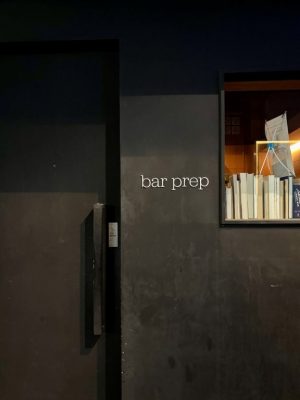
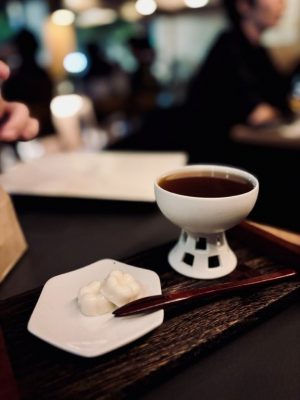
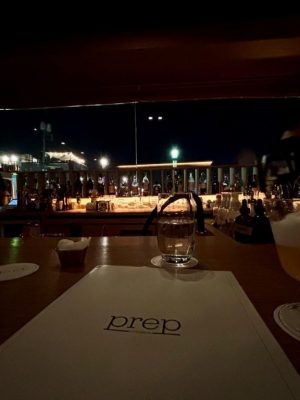

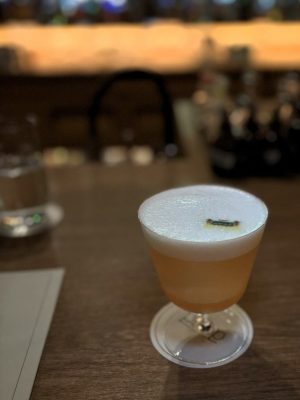

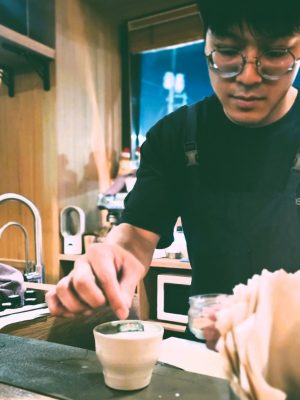
What I love about Bar Prep is the focus. It’s never rushed. The bartenders are present but never performing. There’s no show — just intention, elegance, and flavour. The drinks are classic, but never predictable. Each sip feels like it belongs exactly where it is. That kind of bar is rare.
Bar Prep opens in the afternoon, which makes it the ideal spot after a day wandering among historical tombs, temples and stone walls. Their small food menu is worth noting — the Western-style pasta was a good pairing companion, subtle enough not to interfere with the drinks.
For the Knowledge Thirst – The Art of Making Temonje 1779
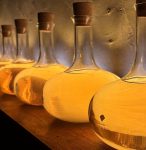 Temonje 1779 is more than just a drink—it’s a labor of love, rooted in centuries-old Korean brewing traditions. The production process is a meticulous journey, blending time-honored methods with modern precision.
- Key Ingredients The foundation of Temonje 1779 lies in its hand-harvested glutinous rice (chapssal), chosen for its rich texture and subtle sweetness. This rice is paired with nuruk, a traditional Korean fermentation starter made from molded grains like wheat, rice, or barley. Nuruk contains the essential fungi and yeast needed to convert starch into sugar and, ultimately, alcohol. The final ingredient is pristine spring water, which ensures purity and enhances fermentation.
- Preparation of the Mash The process begins with the rice, which is washed, soaked, steamed to al dente perfection, and then cooled. Meanwhile, the nuruk is mixed with water to create a fermentation base. This mixture is then combined with the cooked rice in large earthenware jars called hangari, where the magic of fermentation begins.
- Fermentation: A Slow Dance of Flavour Temonje 1779 undergoes low-temperature fermentation, a slow and deliberate process that allows complex flavors to develop naturally. Unlike industrial methods that prioritize speed, this traditional approach emphasizes patience, resulting in a spirit with depth and character.
- Maturation and Aging After fermentation, the liquid is left to age for approximately 100 days in cool conditions. This extended maturation period is critical—it transforms the rice’s savory notes into a smooth, non-viscous spirit with a unique flavor profile. The result is a harmonious blend of fresh fruit aromas, deep nutty undertones, and subtle hints of dried fruit, reminiscent of sherry but with a distinctly Korean herbal finish.
- The Final Touch Once aged, the spirit is carefully filtered to achieve its signature clarity and golden hue. The final product, Temonje 1779, boasts an alcohol content of 18–25%, making it both approachable and complex. Its name pays homage to the year 1779, when the spirit’s heritage first took root, and its bottle design draws inspiration from Silla-era pottery, blending historical elegance with modern craftsmanship.
Gyeongju’s Cocktail Scene — Small, Personal, Unforgettable
What I’ve learned coming back is this: Gyeongju doesn’t need to shout. It speaks in flavours, gardens, traditions, and tiny connections. A city that brews slow. Drinks slower. And remembers what really matters in a good bar: people, place, presence. Whether it’s a smoky citrus cocktail across from a hanok courtyard, or a perfectly built stirred drink served after a quiet conversation, Gyeongju’s bars hold something lasting.
So if you find yourself here — take your time. Drink in the atmosphere. And listen closely. Some flavours only unfold when you slow down.