K Pour Chronicles – Episode 7: The Final Pour at Bar Cham
Some bars linger in your memory. Others call you back. Bar Cham did both. It was the first stop on the final leg of my K-Pour journey—a return visit, yes, but also a homecoming. After weeks of wandering through Seoul, Jeju, Gyeongju, Daegu, and Busan, we found ourselves back in Seochon. The streets hummed with familiarity, the neighbourhood’s rhythm warm and unhurried. Our destination was never in doubt: Bar Cham.
No reservations on weekends. No shortcuts—except, perhaps, the quiet understanding that some places are worth the wait. A visit to Seoul without Cham feels like a story missing its final chapter. You can soften the anticipation with a drink at one of its sister bars (as we did at Bar Pomme, further down the adventure). But that’s the thing about Bar Cham: even the waiting becomes part of the experience.
Bar Cham – A Glass Full of Korea
Bar Cham is not your typical Seoul bar. Tucked inside a century-old hanok in one of the city’s oldest neighborhoods, it feels like a hushed temple dedicated to Korean ingredients. Its philosophy is embedded in its name: Cham 참, the Korean word for oak—a nod to both the bar’s physical structure and its grounded, elemental approach.
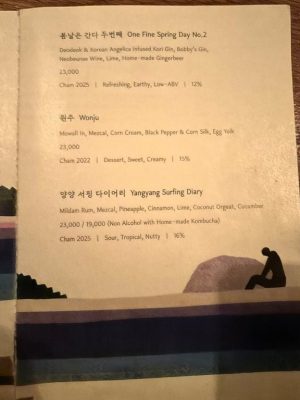
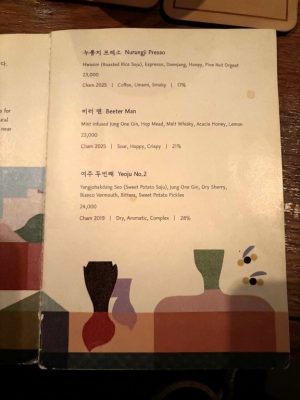
While many high-end bars lean on Scotch, mezcal, or gin, Cham is unapologetically Korean. Soju, makgeolli, yakju—all sourced from small, artisanal distilleries across the country—form the backbone of the menu.
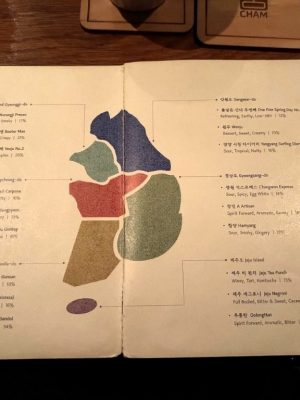
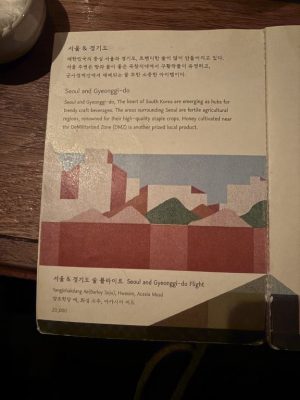
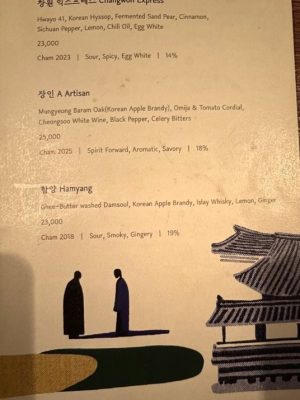
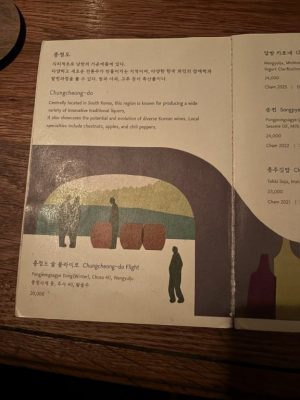
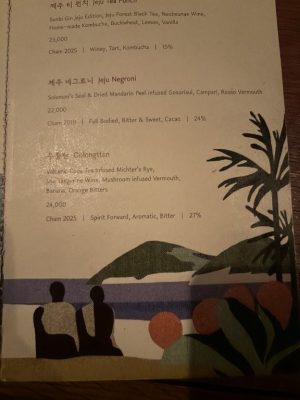
Each drink tells a story not just of flavor, but of place. The menu is a map, literally. From Jeju to Wonju, Chungju to Haman, cocktails are built around regional identity, turning every sip into a journey.
The Modern Hanok
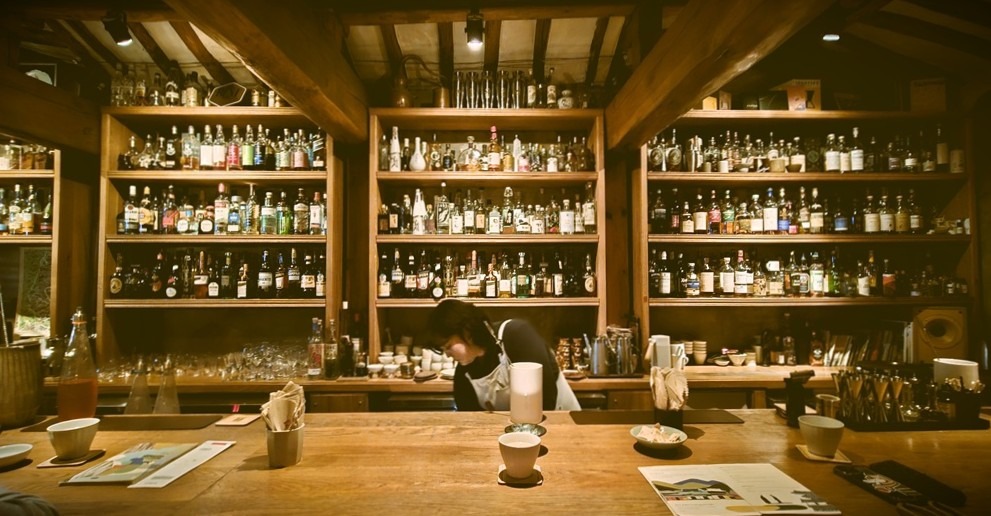
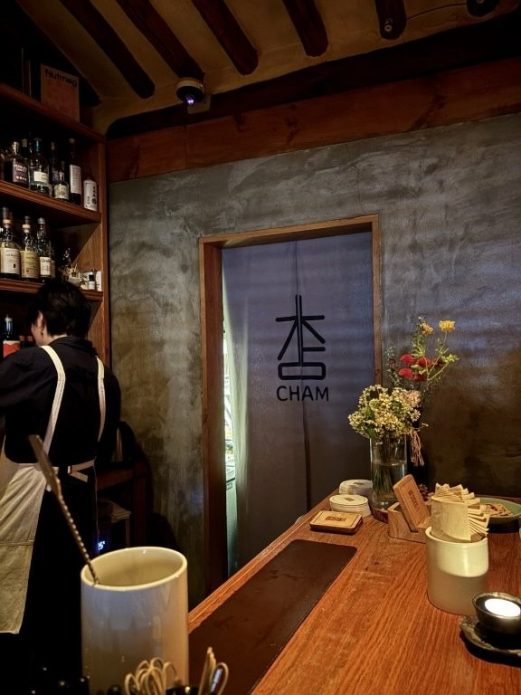
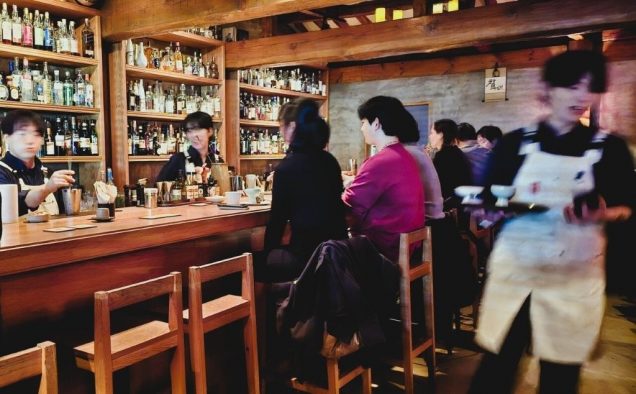
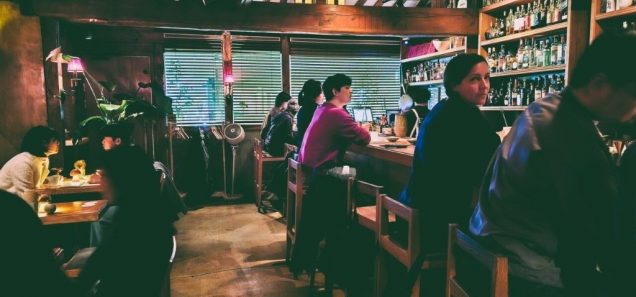
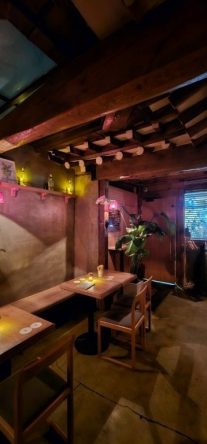
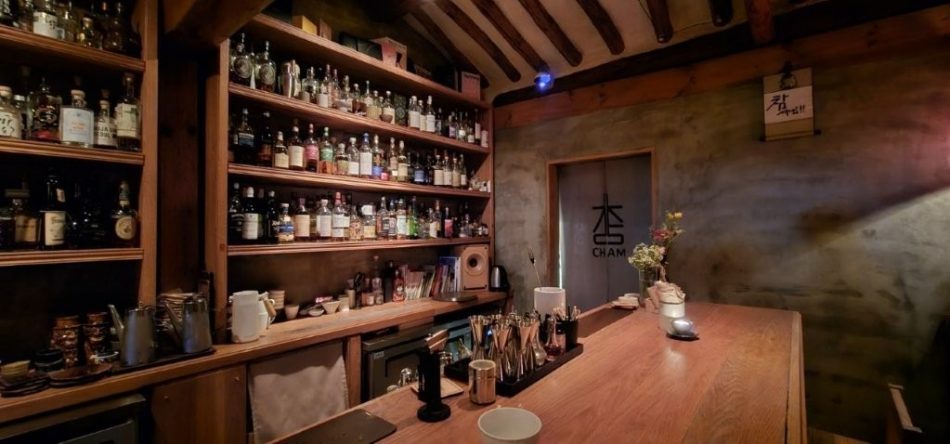
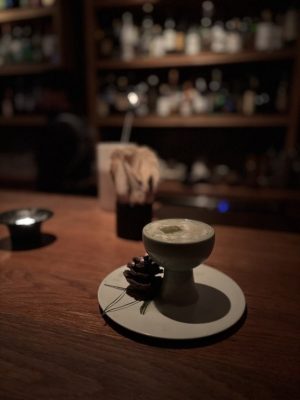
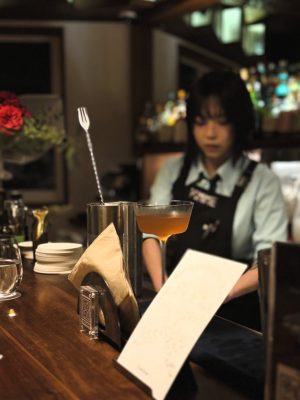
Located west of Gyeongbokgung Palace in Seochon, Bar Cham is housed in a renovated hanok dating back over a hundred years to the Joseon Dynasty. The design is a masterclass in Newtro—new and retro in perfect balance. Heavy oak wood, exposed rafters, and traditional clay walls meet thoughtful lighting and modern restraint. The space is warm and intimate: exposed beams, stone textures, soft golden light. No flash. No spectacle. Just deep, understated elegance.
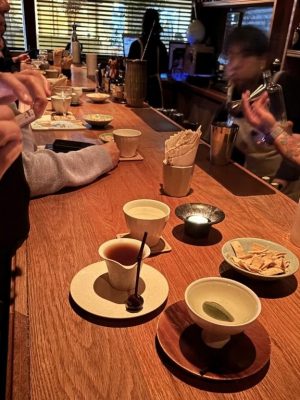
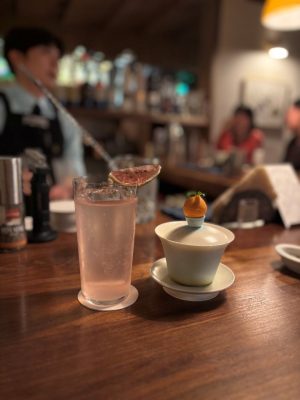
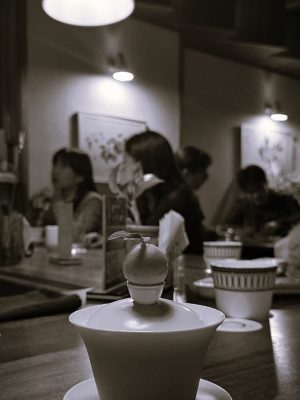
Around twenty seats in total—a few at the bar, a couple of low tables for small groups. The kind of room that invites conversation, or, if you arrive alone, wraps you in contemplation. One wall is lined with spirits and ceramic vessels, arranged like a working archive. The atmosphere balances the austerity of traditional Korean architecture with the warmth of a neighborhood tavern—one that just happens to serve world-class cocktails. Cham deliberately avoids the flash of Gangnam, opting instead for subtlety, earthiness, and calm confidence.
The Bartender’s Bartender
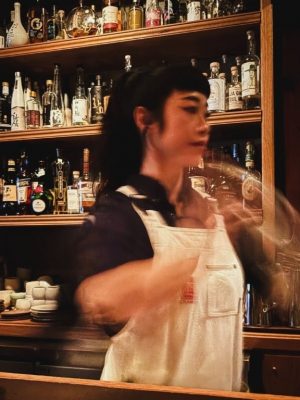
Behind it all stands Lim Byung-jin (BJ Lim)—World Class Korea Champion 2015 and a pioneer of modern Korean cocktail culture. Beyond Bar Cham, he also runs Bar Pomme and Cham in Season, each exploring a different facet of Korean flavor. Among bartenders, Lim is often cited as the mentor who championed a “Korea-first” ethos in high-end mixology. But inside Cham, none of that matters. Here, he’s simply present—polishing the bar, checking the temperature of your glass, letting Korea speak for itself. The global recognition has followed naturally. Bar Cham reached No. 6 on Asia’s 50 Best Bars 2025 and remains a fixture on the World’s 50 Best extended list. Yet inside, the mood is unchanged: focused, calm, and deeply human.
What We Drank (and Why It Matters)
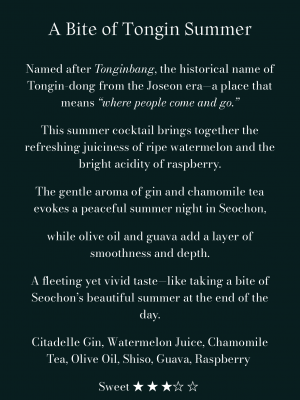
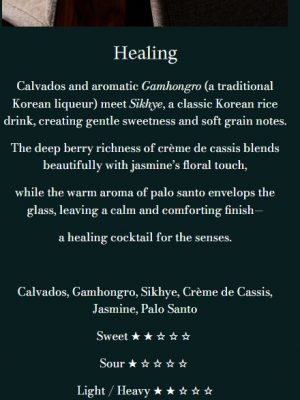
We visited during the launch of Cham’s sixth regional menu — a return to the bar’s original commitment: dividing Korea into regions and capturing the charm of each through local spirits and ingredients.
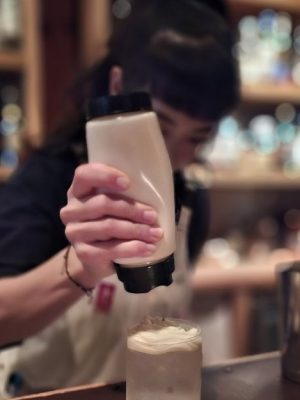
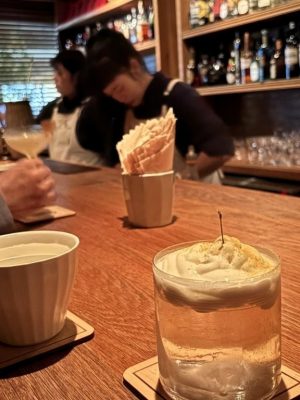
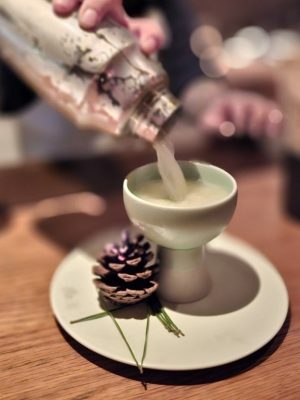
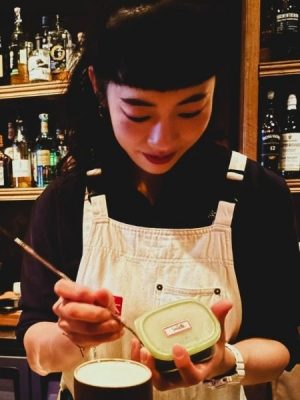
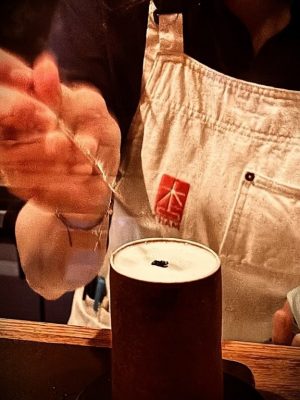
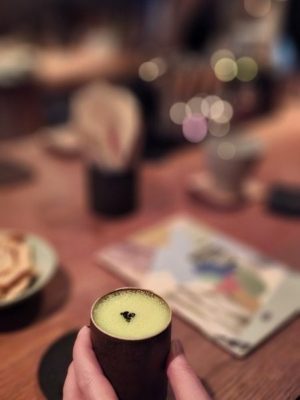
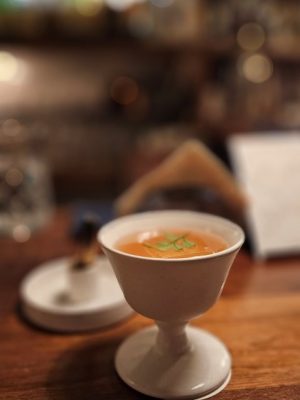
I began with an old flame: Chungju Gimbap. I’d had it before, and its memory had never loosened its grip. Tokki soju paired with a makgeolli-wasabi shrub, cucumber, and a single, precise drop of sesame oil. Savoury, yes, but brilliantly so. It doesn’t just taste like Korea’s iconic seaweed rice roll; it feels like it. Bright. Umami-driven. Familiar. The kind of cocktail that doesn’t try to impress — it simply reminds you who you are. Drink after drink, this rhythm repeats—sensory, deliberate, deeply considered.
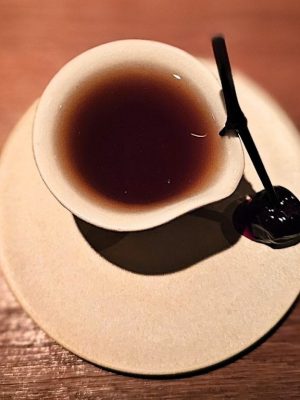
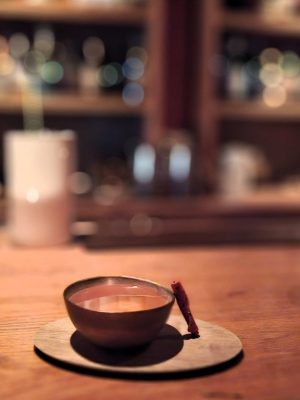
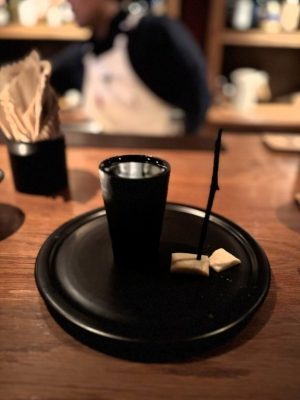
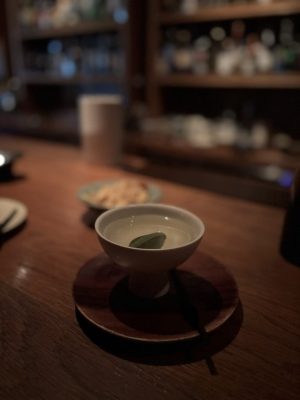
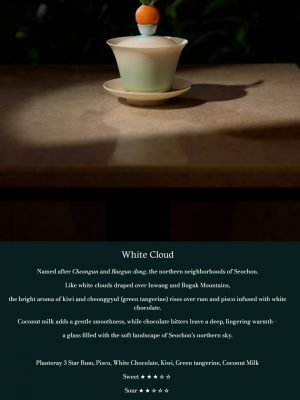
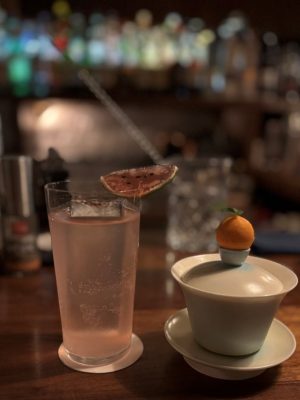
What elevates the experience further is Cham’s use of edible companions: a rice cake, a piece of chocolate, a small bite—meant to be eaten halfway through the drink. Do so, and the cocktail shifts. Not as a trick, but as choreography. A story in two acts.
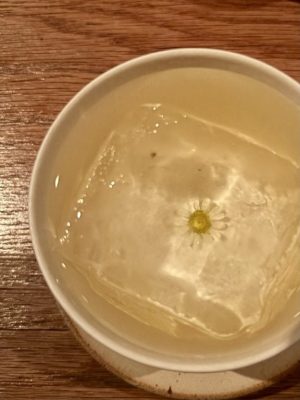
Bar Pomme – One Neighbourhood, Two Perspectives
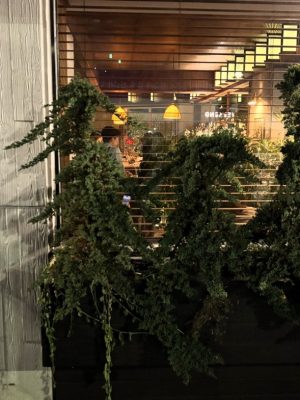
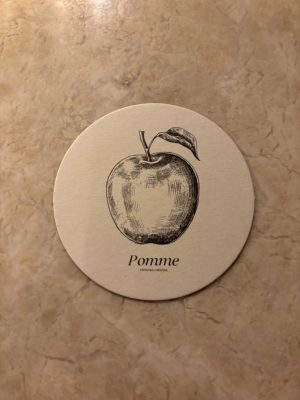
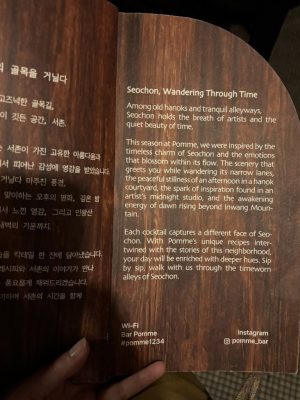
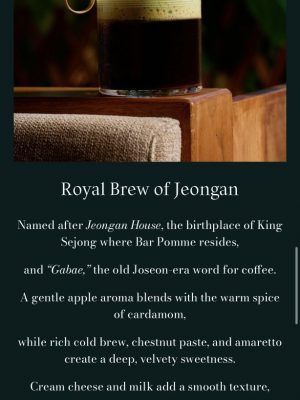
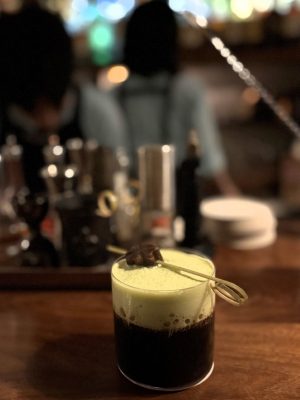
Just a few alleys away sits Bar Pomme, the second stop in BJ Lim’s Seochon circuit. If Cham honors Korea’s deep roots, Pomme feels like its modern branch—lighter, more fruit-forward, and playfully elegant. Opened in 2023 to ease the long waits at Cham, Pomme celebrates fruit terroir, with a particular focus on apples.
Calvados, apple brandy, and local produce from Chungju are given new life through fermentation, zero-waste preparation, and beautifully layered cocktails. The music leans into 90s R&B and soul. The drinks are brighter, more aromatic than Cham’s savoury depth—but the care is identical. The calm. The storytelling. The quiet hospitality that makes you want to linger.
The Final Pour
Bar Cham was the last official stop of the K-Pour Chronicles. But it didn’t feel like an ending. More like a soft landing. A return to the roots—not just of Korean spirits, but of why we drink in the first place.
To slow down. To connect. To taste something that tells a story. I left full—not just from the drinks, but from the weight of the journey: the faces behind the bars, the spirits in the glass, and the moments in between. Seven episodes. Countless pours. And a thousand reasons to return. To be continued. See you again, South Korea—sooner than you expect.
________________________________________
A Short Guide to Korean Spirits (For the Curious)
- Soju: Traditionally distilled from rice (today also wheat or sweet potato), classic soju is clean, dry, and expressive. Artisanal soju focuses on fermentation character rather than neutrality.
- Makgeolli: An unfiltered rice wine made with rice, water, and nuruk (fermentation starter). Milky, lightly sparkling, low‑ABV, and often slightly sweet or tangy.
- Yakju / Cheongju: Clear, filtered rice wines made similarly to makgeolli but refined. Elegant, aromatic, and closer in texture to sake or sherry.
- Gosorisul: A traditional Jeju spirit distilled from millet. Earthy, rustic, and expressive of volcanic island terroir.
- Mowallin: An organic rice distillate from Wonju. Clean yet characterful, often used where depth and structure are needed.